


Workforce Analysis
The application enables detailed workforce analysis: track employee headcount, movements, and turnover, calculate payroll costs, assess labor productivity, and make informed staffing decisions.
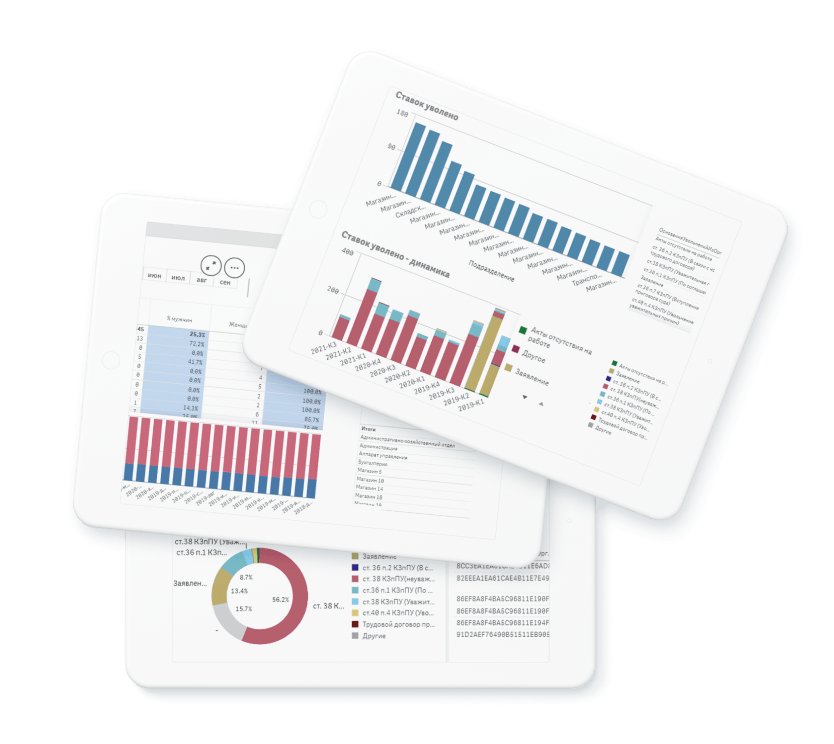

Where are staff shortages and low staffing levels occurring?

What is the extent of employee turnover in each department, and what are its causes?

Which departments or roles have excessive or insufficient workloads?

How are working hours used: hours worked, hours paid, and deviations from standard hours?

What is the total cost of personnel, and how is it broken down?

Where are costs rising while staffing levels are declining?

Which departments and roles are the most efficient in terms of margin or revenue per employee?

How closely does actual headcount match the approved staffing plan?

What is the average length of time employees spend in their current roles?

What percentage of employees work overtime?

What are the projected staffing needs for the next quarter, taking current turnover rates into account?

What is the average time to hire for different roles?

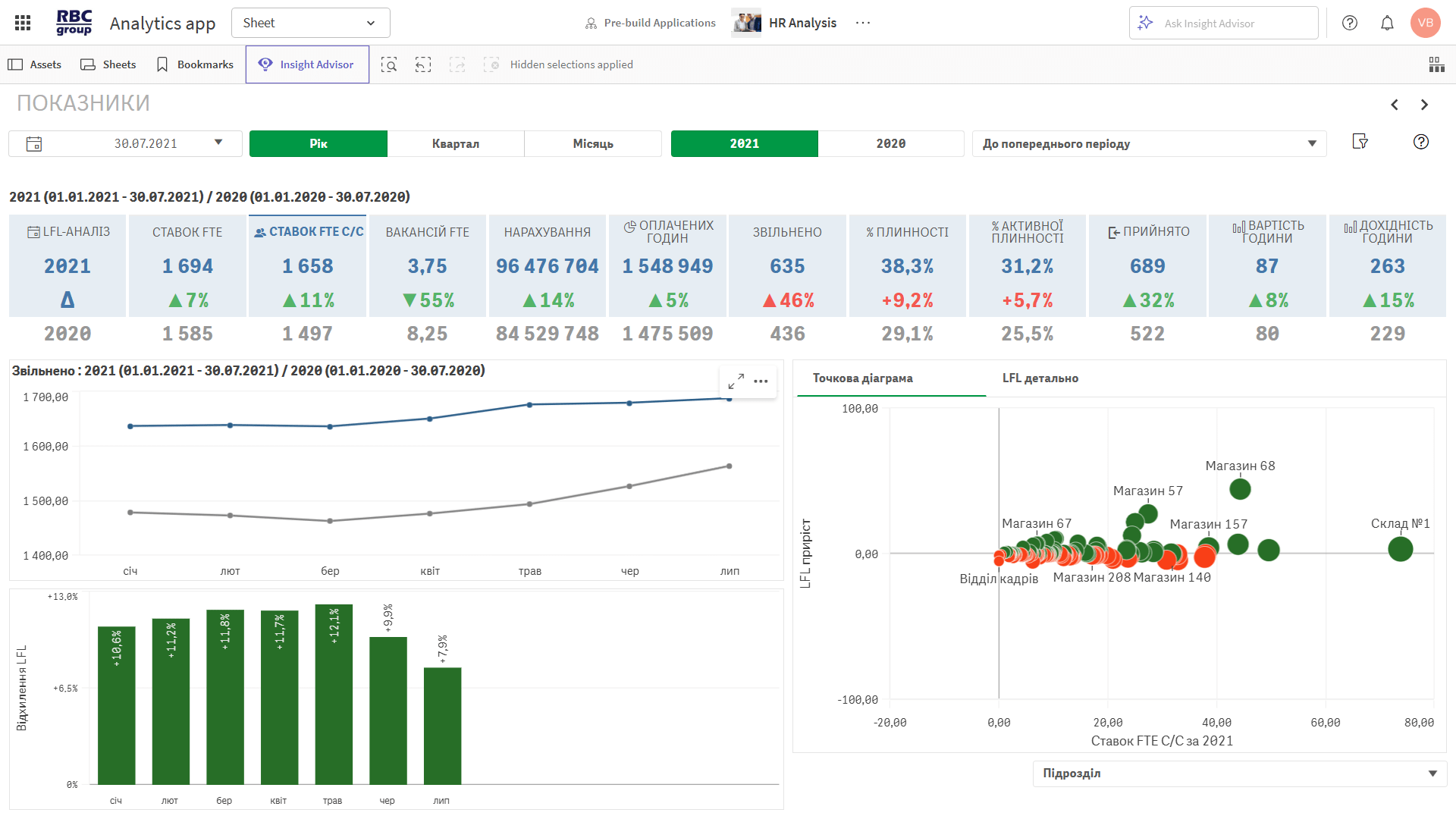
The preconfigured "Workforce Analysis" solution enables a comprehensive analysis of key workforce metrics using the LFL methodology: turnover, headcount, staff turnover, and workforce composition. Track working hours and personnel costs. Conduct productivity assessments
These metrics show current staffing levels and deviations from the staffing plan.
◾ FTE rates (actual vs. budgeted)
◾ Number of employees (people)
◾ Staffing level, %
◾ Number of open positions (FTE)
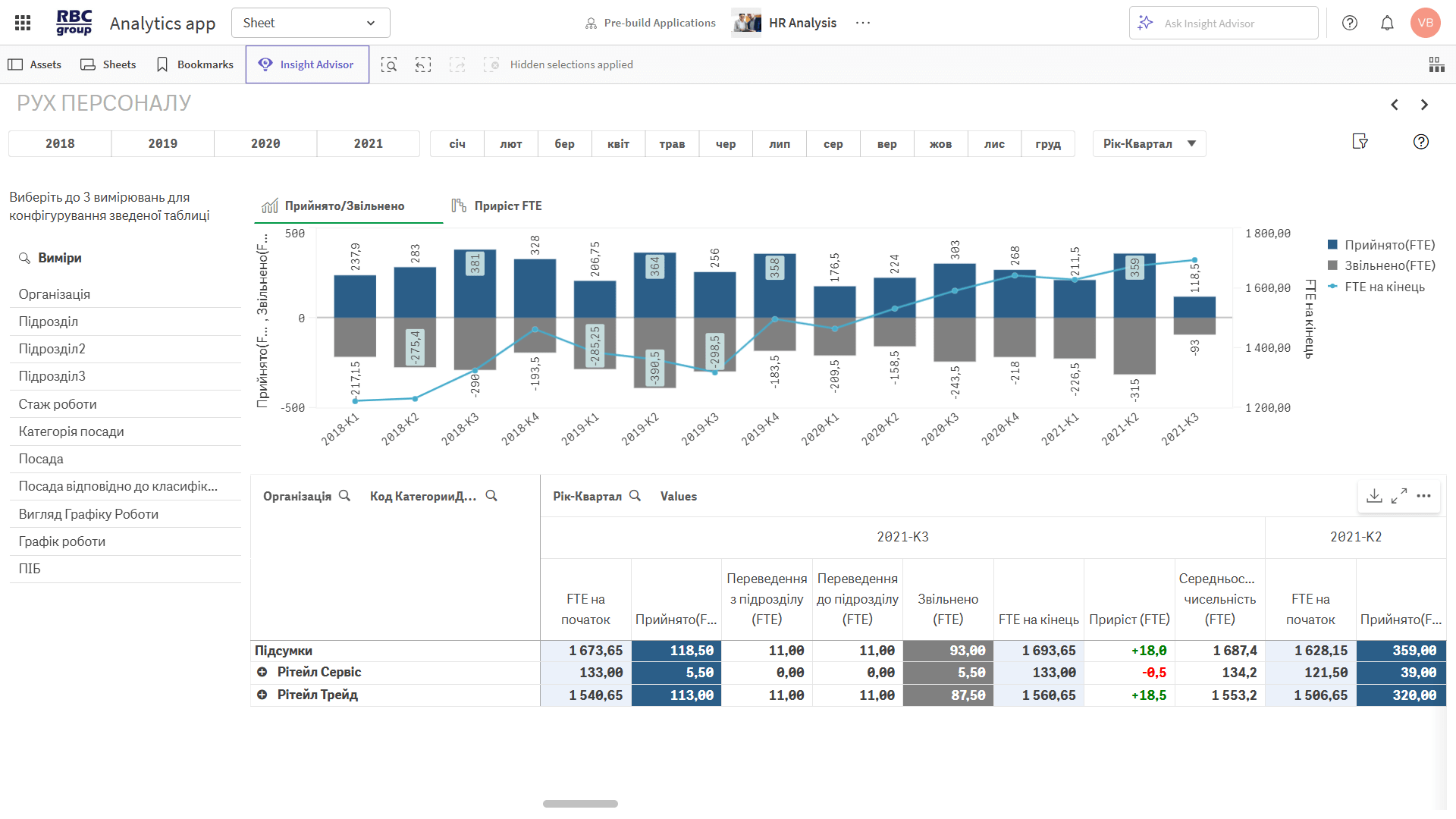
Assess workforce stability and the causes of turnover.
◾ Hires / Terminations (FTE)
◾ Turnover rate, % of voluntary and involuntary turnover
◾ Internal transfers between departments
◾ Reasons for terminations and their breakdown
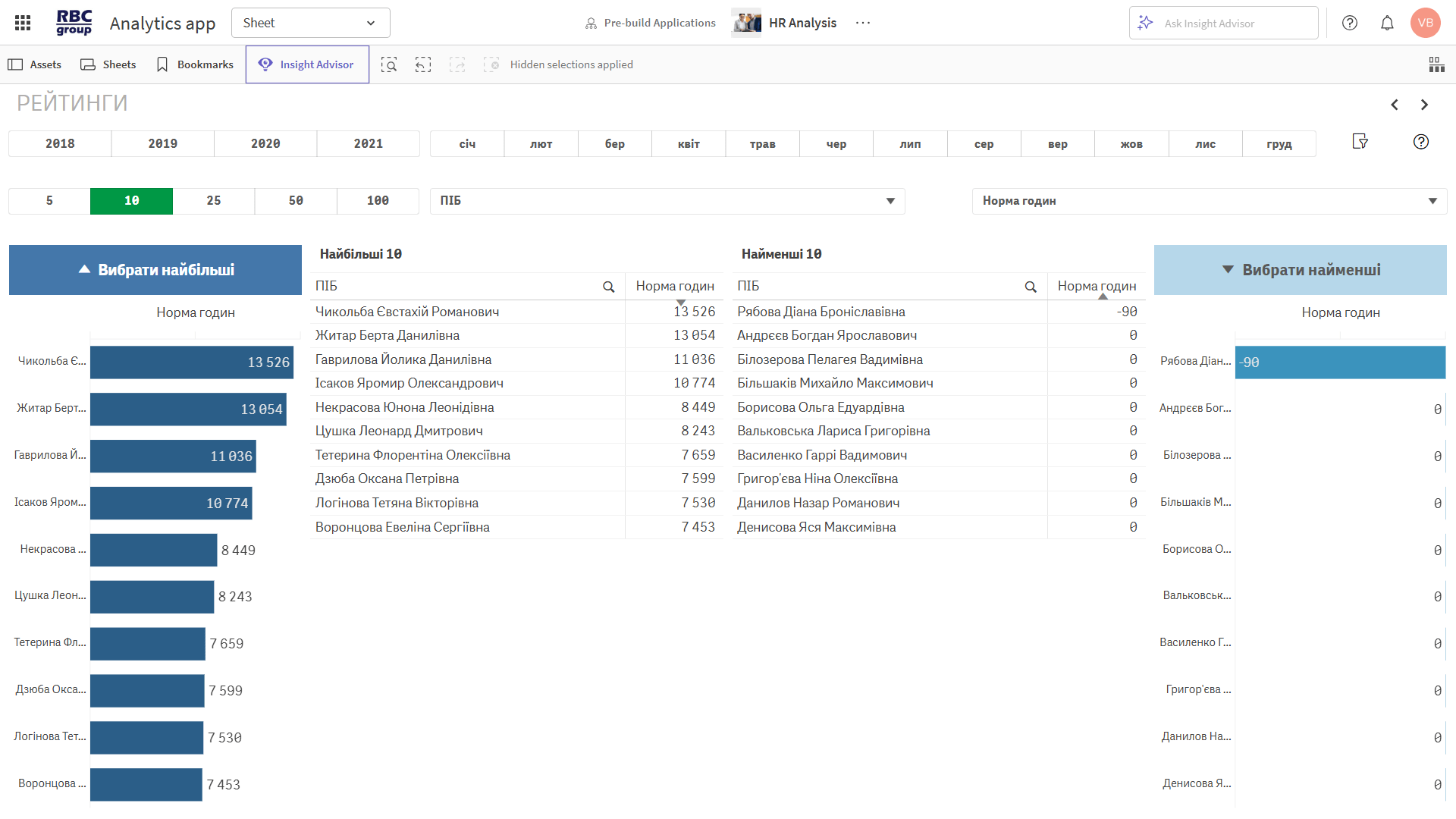
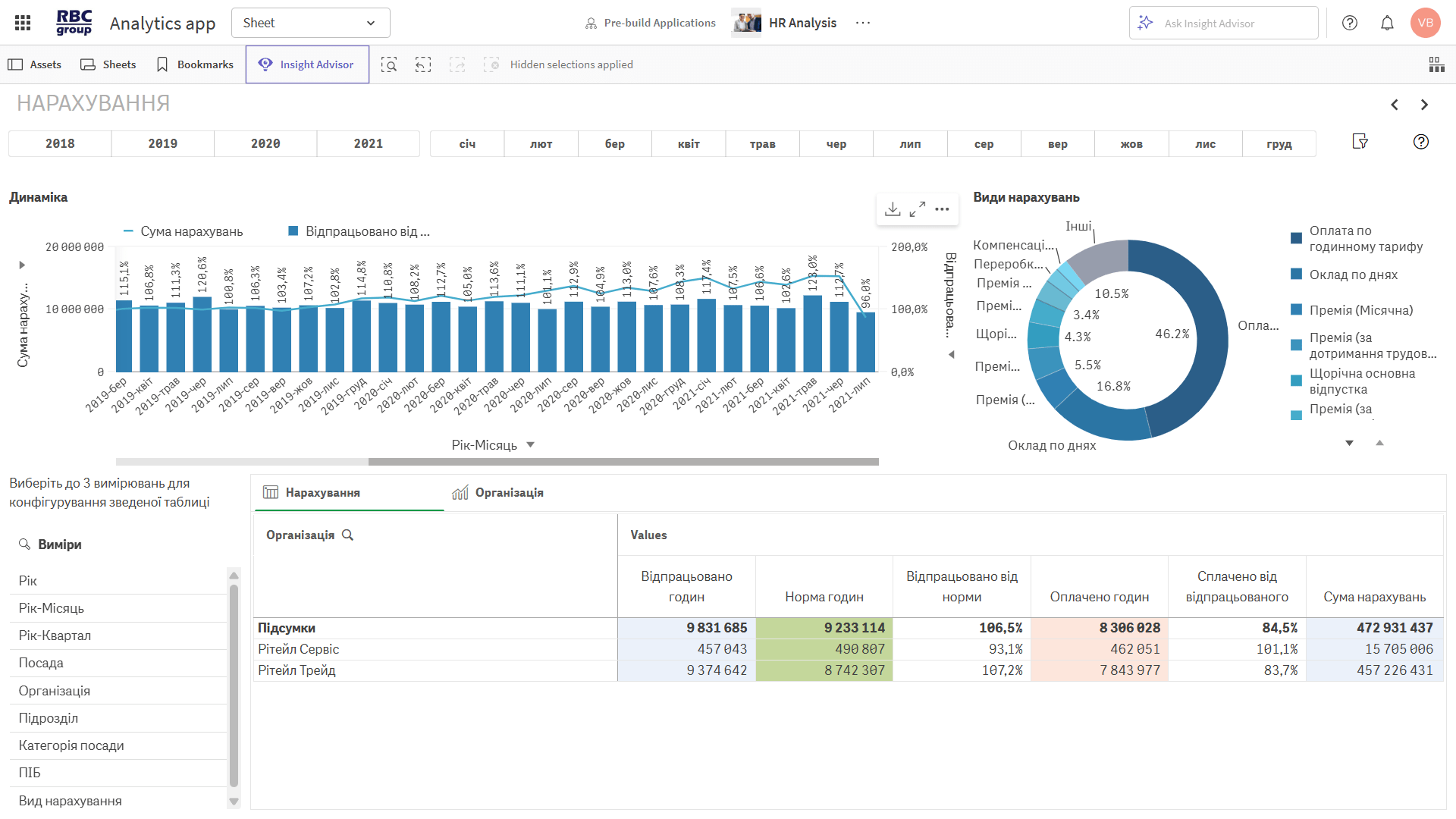
Reflects employees' actual workload.
◾ Hours worked, quota, % of quota met
◾ Hours paid, % of hours worked paid
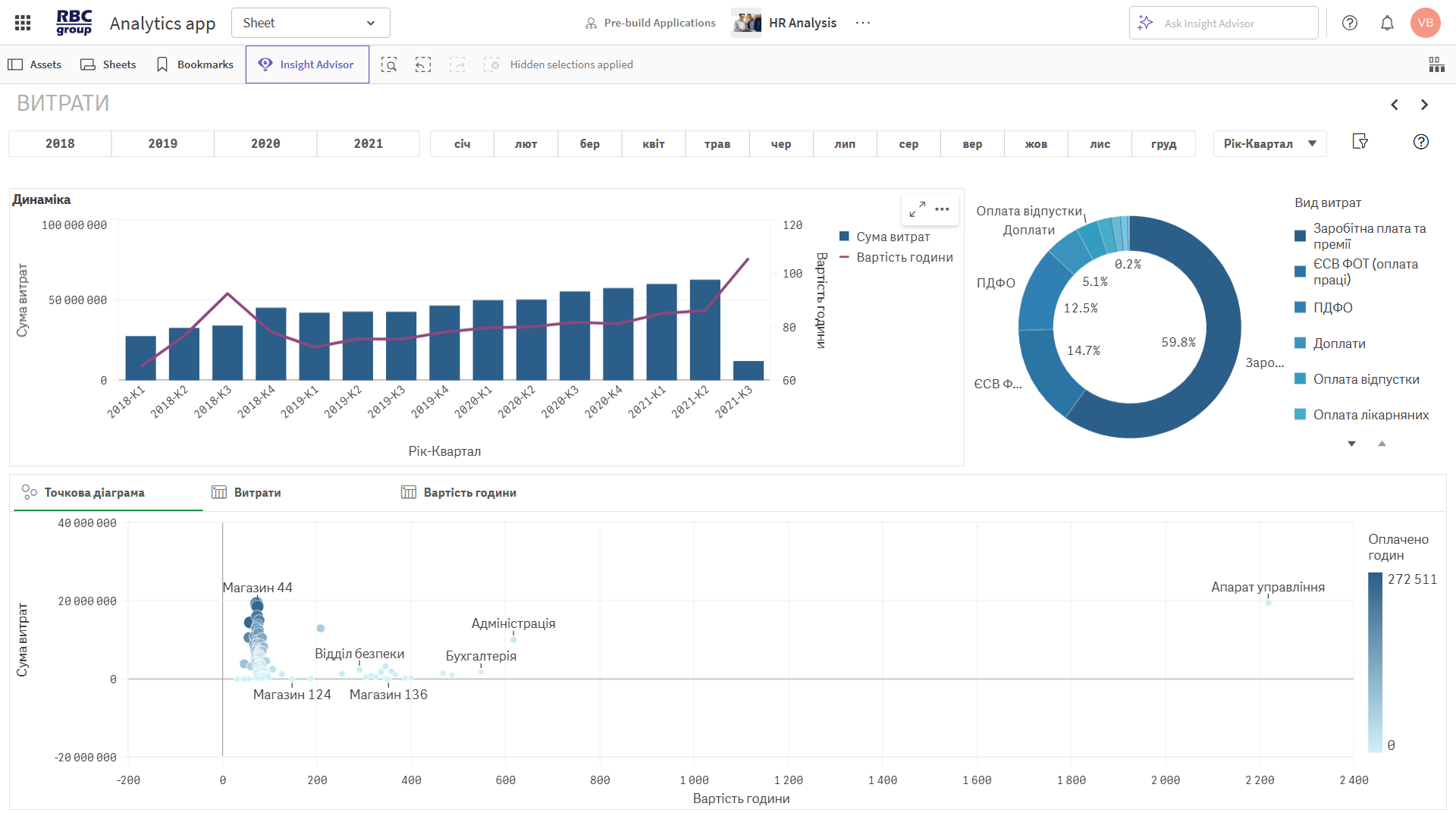
Shows personnel costs broken down by various categories.
◾ Total accruals
◾ Hourly rate
◾ Costs by type of accrual and department
They assess the economic efficiency of their staff.
◾ Revenue per FTE
◾ Margin per FTE
◾ Profit per hour
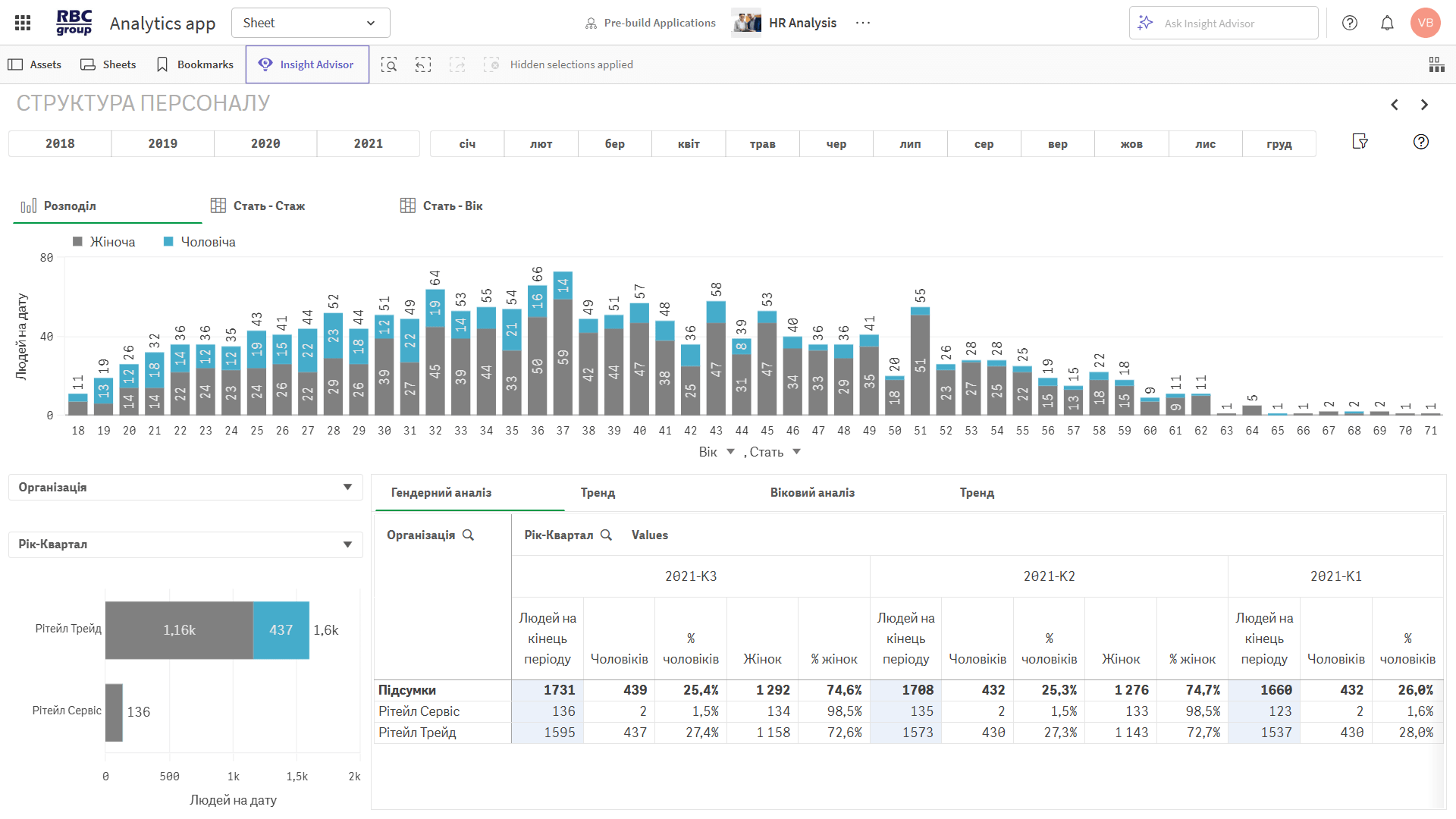
These metrics help shape recruitment and development strategies.
◾ Breakdown by gender, age, and tenure
◾ Structure by category and position
◾ Trends in headcount by gender and age
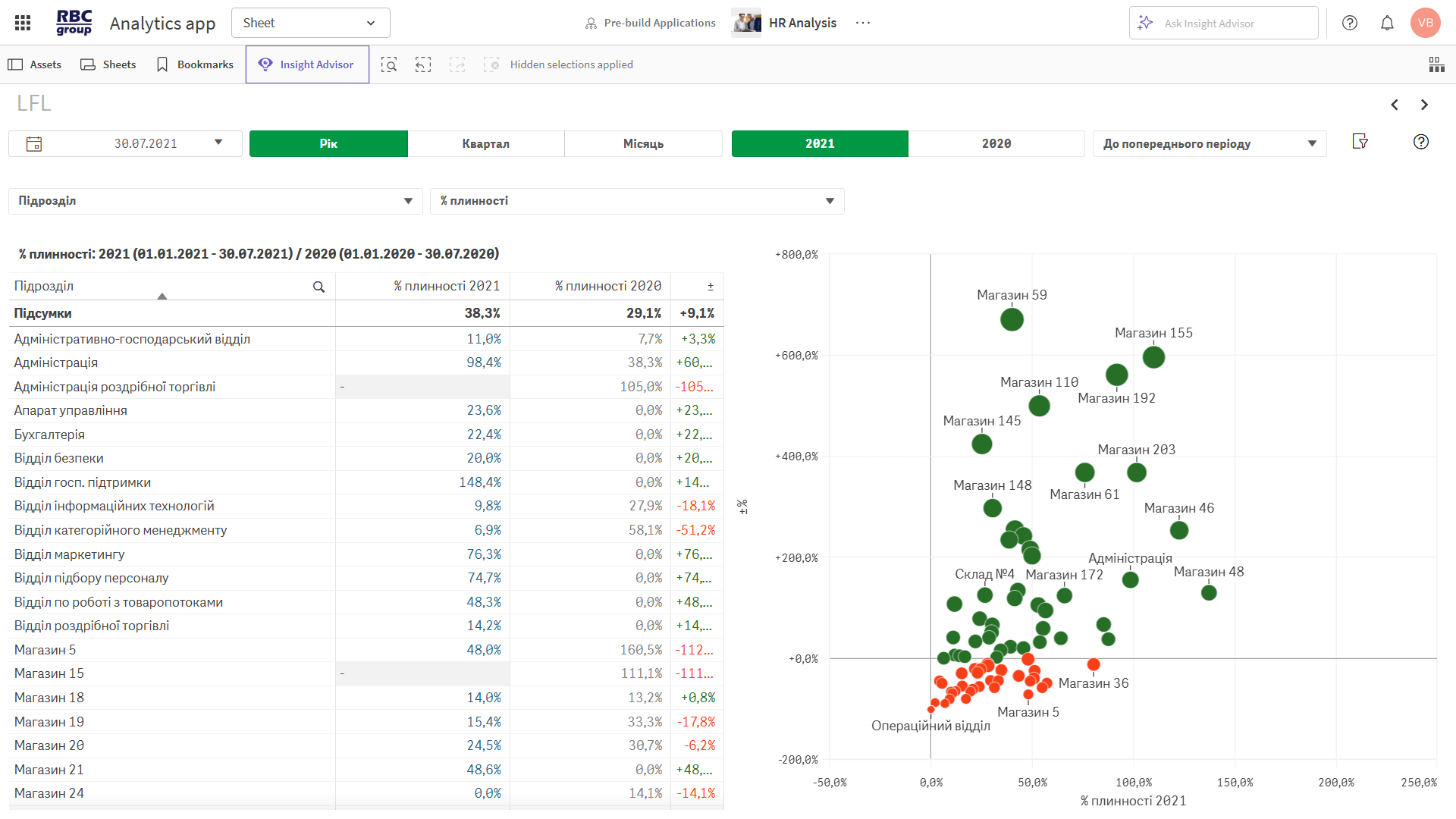
Used to identify trends and deviations.
◾ Comparison of metrics by department, region, and category
◾ Like-for-like analysis: year-over-year, period-over-period
◾ Trends and deviations in key HR metrics
 Transparency regarding headcount and turnover
Our BI solution consolidates data from HR and accounting systems, visualizing headcount, turnover, staffing levels, and FTEs across the necessary dimensions.
This enables you to quickly identify anomalies and make informed management decisions.
Cost and Productivity ControlMetrics such as personnel costs, hourly productivity, and FTE margins enable you to assess departmental performance and manage payroll budgets.
The result is reduced costs and increased productivity.
Strategic Management and ForecastingThe system displays demographic trends, category-specific dynamics, and demand forecasts based on LFL and scenario analyses.
BI helps develop a workforce strategy tailored to changes in the business.
Transparency regarding headcount and turnoverOur BI solution consolidates data from HR and accounting systems, visualizing headcount, turnover, staffing levels, and FTEs across the necessary dimensions.
This enables you to quickly identify anomalies and make informed management decisions.
Cost and Productivity ControlMetrics such as personnel costs, hourly productivity, and FTE margins enable you to assess departmental performance and manage payroll budgets.
The result is reduced costs and increased productivity.
Strategic Management and ForecastingThe system displays demographic trends, category-specific dynamics, and demand forecasts based on LFL and scenario analyses.
BI helps develop a workforce strategy tailored to changes in the business.


RBC Group helps companies leverage data at every level—from integration and preparation to analytics, forecasting, and artificial intelligence. Its solutions cover four key areas of data management.





Workforce Analysis: Optimizing HR Operations and Improving Business Performance
They say that personnel is everything. A comprehensive personnel analysis provides the opportunity to ensure that a company has the right number of qualified employees and to optimize their performance.
The main objectives of employee analysis:
- determine the extent to which the company is adequately staffed;
- analyze staff turnover and the use of working hours;
- assess actual labor productivity;
- Evaluate wage levels and optimize them as necessary.
When conducted competently and comprehensively, this type of analysis can help improve work processes, increase productivity, determine the optimal number of employees, and reduce labor costs while simultaneously improving the quality of work and staff satisfaction.
How should we conduct a workforce analysis?
Comprehensive employee analysis tools from RBC Group
So, we have developed and are pleased to offer you our proprietary solution: the preconfigured “Personnel Analysis” solution. With it, you can analyze key HR metrics.
For example, conduct:
- analysis of headcount;
- analysis of employee motivation;
- analysis of workforce structure;
- analysis of human resources management, etc.
Traditional analytical tools, such as surveys, interviews, observations, job descriptions provided by employees themselves, and combinations of these methods, work well for small businesses with small staff. But for medium and large businesses, more comprehensive and automated solutions are needed. Solutions that allow you to track changes in headcount, pay rates, job openings, expenses and accruals, hours worked, employee turnover, and more in real time. And they do so in a clear, visual way—with user-friendly dashboards, charts, diagrams, the ability to compare metrics across different periods, and so on.
That’s exactly what we offer!
Who Should Use HR Analytics Tools
Our solution for analyzing human resources management within an organization is designed for three categories of individuals:
- Business owners and executives
They will be able to collect and process personnel data from various sources—such as CRM, ERP, DWH, Excel, and others. They will also be able to analyze KPIs, assess employee costs, distribute workloads more effectively, and, when necessary, make timely, objective, and appropriate HR decisions.
- HR managers and HR representatives
They will be able to reduce the time and labor required to collect and process HR data, analyze personnel metrics in greater detail and more comprehensively, objectively assess productivity, and monitor staff movement, turnover, and work capacity. Plus, they will be able to optimize the hiring process for new employees.
- IT executives
They will be able to extract HR data from various systems and sources, receive prompt responses to user requests even when dealing with large volumes of information, and use a modern, feature-rich BI platform to address a wide range of business challenges.
Business sectors where analyzing employee performance is critical
It’s easier to say where such a tool would be redundant. Today, analytics is widely used in retail, the FMCG sector, banking, pharmaceutical companies, agricultural holdings, manufacturing, the restaurant industry, telecommunications, and so on.
Objectively speaking, the larger the workforce and the more complex its structure, the greater the need for specialized software to analyze and subsequently optimize it. Otherwise, staffing issues may sooner or later become critical and cause serious financial damage to the business.
Analyzing your staff will not only help you streamline your workflow but also prevent serious mistakes. For example:
- mistakes in the selection and onboarding of new staff;
- the loss of highly qualified employees and the hiring of unqualified personnel;
- staff burnout due to overwork and unfair financial compensation;
- mistakes made by employees themselves for a variety of reasons—ranging from simple fatigue or inexperience to dissatisfaction with company policy and a desire to spite management.
We invite you to schedule a free consultation with one of our experts and experience firsthand all the benefits of RBC Group’s HR analytics tools by taking advantage of our demo access.
Multi-level employee analysis and HR process optimization are easier than they seem. And we prove it in practice!

