


Cash Flow in Azerbaijan
"Cash Flow" is one of the modules in the "Financial Analysis" analytical application. It enables automatic consolidation of financial statements across a group of companies when accounting is conducted in different accounting systems with varying accounting policies. It includes a ready-to-use analysis methodology and connectors to various accounting systems.


Which options for using excess funds are most effective—early repayment, savings accounts, or investments?

How can I automatically exclude intra-group transactions when generating reports?

Where do cash flow gaps occur, and during which period is the liquidity shortage most severe?

How can you identify future cash flow gaps and model scenarios to cover them?

How will cash flow change if key parameters (sales volume, payment terms, loans) are adjusted?

In which financial institutions and in which settlement accounts are excess balances concentrated? How can they be effectively reallocated?
Which counterparties and transactions place the greatest strain on cash flow?
What are the variances between the plan and actual figures by account and Central Federal District?

What scenarios allow you to maintain a positive balance in your checking accounts?

What was the volume of cash flows from operating, investing, and financing activities for the period?

What sources of funding are needed to cover the deficit?

To what extent do current balances cover scheduled payments?
a BI platform



This preconfigured solution enables the analysis of key performance indicators for operating, investing, and financing activities. It supports plan-vs.-actual, dynamic, percentage-based, comparative, and LFL analysis for a company or group of companies.
The solution is designed to provide company executives and specialists with tools for quick and convenient analysis across all dimensions: organization, responsibility centers, departments, and by line item.
This preconfigured solution enables the analysis of operational, investment, and financial performance metrics. It includes plan-versus-actual, trend, percentage, comparative, and LFL analyses for a company or group of companies.
The solution is designed for executives and specialists, providing them with a convenient and effective tool for analyzing data across various dimensions: organization, responsibility centers, departments, and individual line items.
Reflects the cash flows generated by core business operations.
◾ Customer receipts (by period and counterparty)
◾ Payments to suppliers and contractors
◾ Tax and payroll payments
◾ Net operating cash flow (OCF)
◾ Budget variances by line item
◾ % of operating expenses covered by cash inflows
◾ Return on operating cash flow
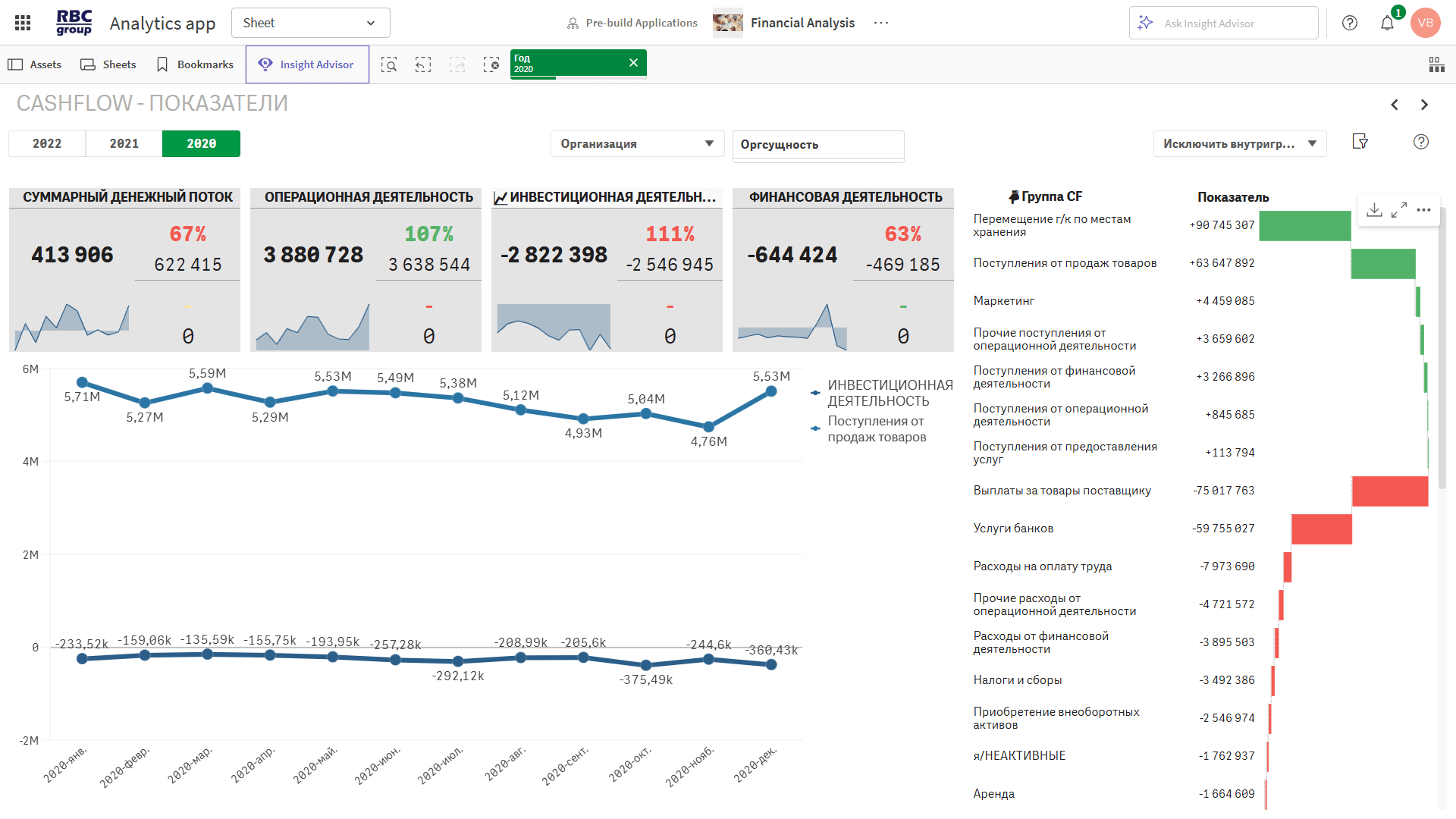
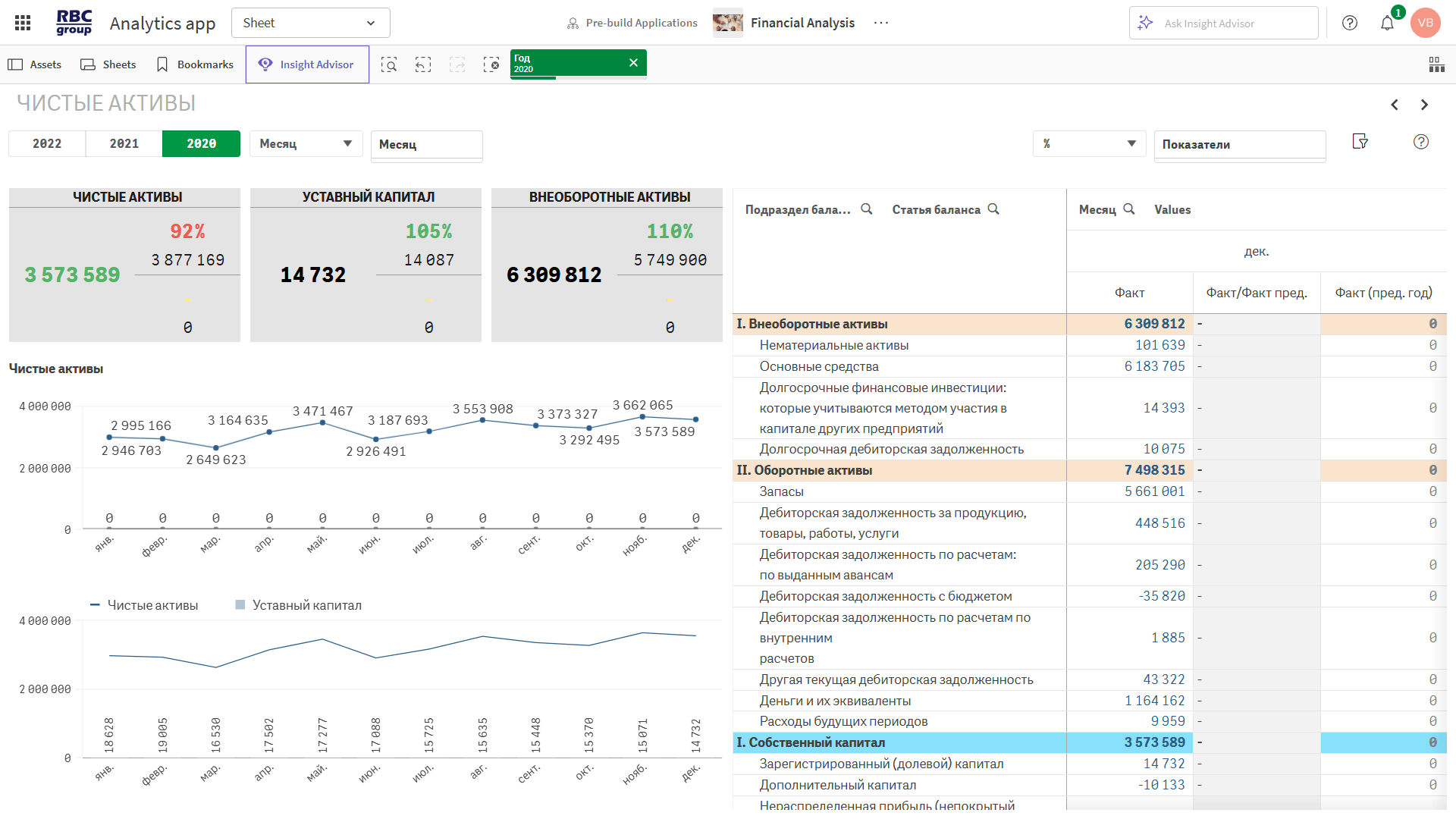
Tracks cash flows related to investments in long-term assets and their disposal.
◾ Capital expenditures (CapEx) by project and financial region
◾ Proceeds from asset sales
◾ Net investment cash flow
◾ Comparison of CapEx to the approved budget
◾ Variances by project and funding source
Reflects business financing and profit distribution.
◾ Cash inflows from loans and credit lines
◾ Loan repayments
◾ Interest and dividend payments
◾ Changes in debt burden
◾ Net financial cash flow
◾ Coverage of liabilities by cash balances
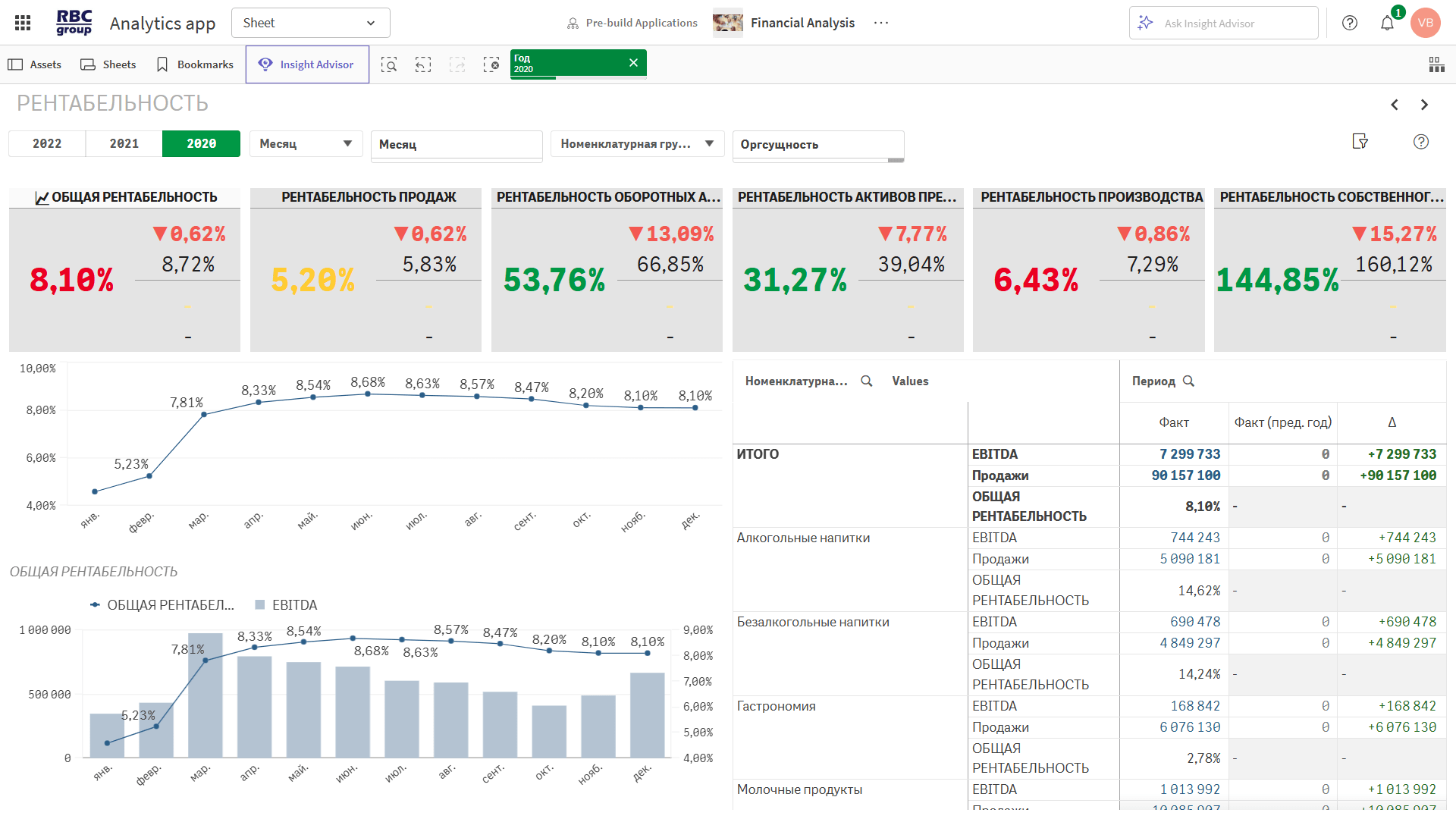
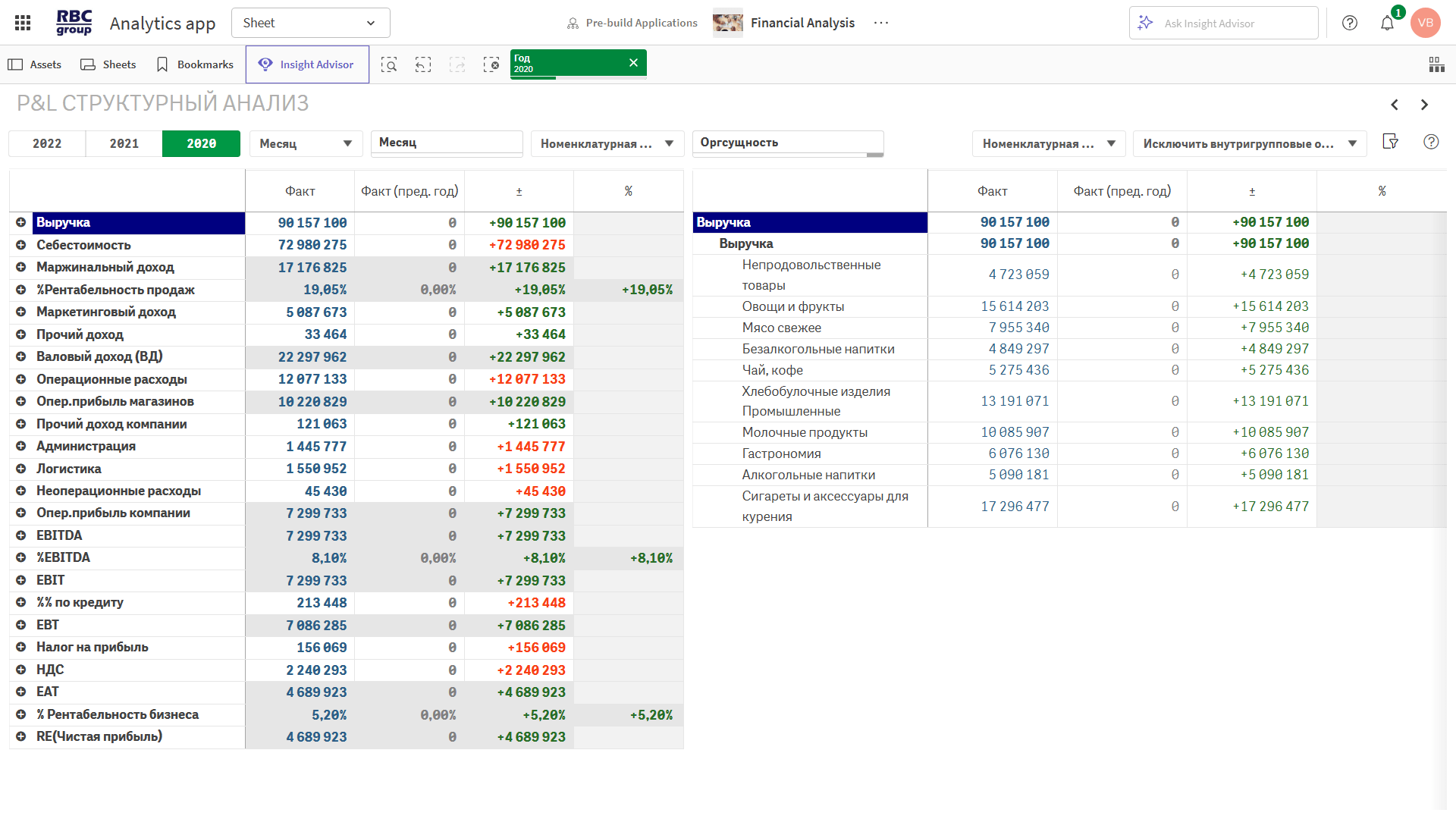
Provide a comprehensive overview of cash flows.
◾ Total cash flow by business segment
◾ Balances in operating accounts by period and Central Federal District
◾ DCF plan-vs.-actual analysis with variances
◾ Cash flow gaps (actual and forecast)
Tools for forecasting and evaluating scenarios.
◾ What-if analysis of revenue, payments, and loans
◾ Cash balance forecasts by date and scenario
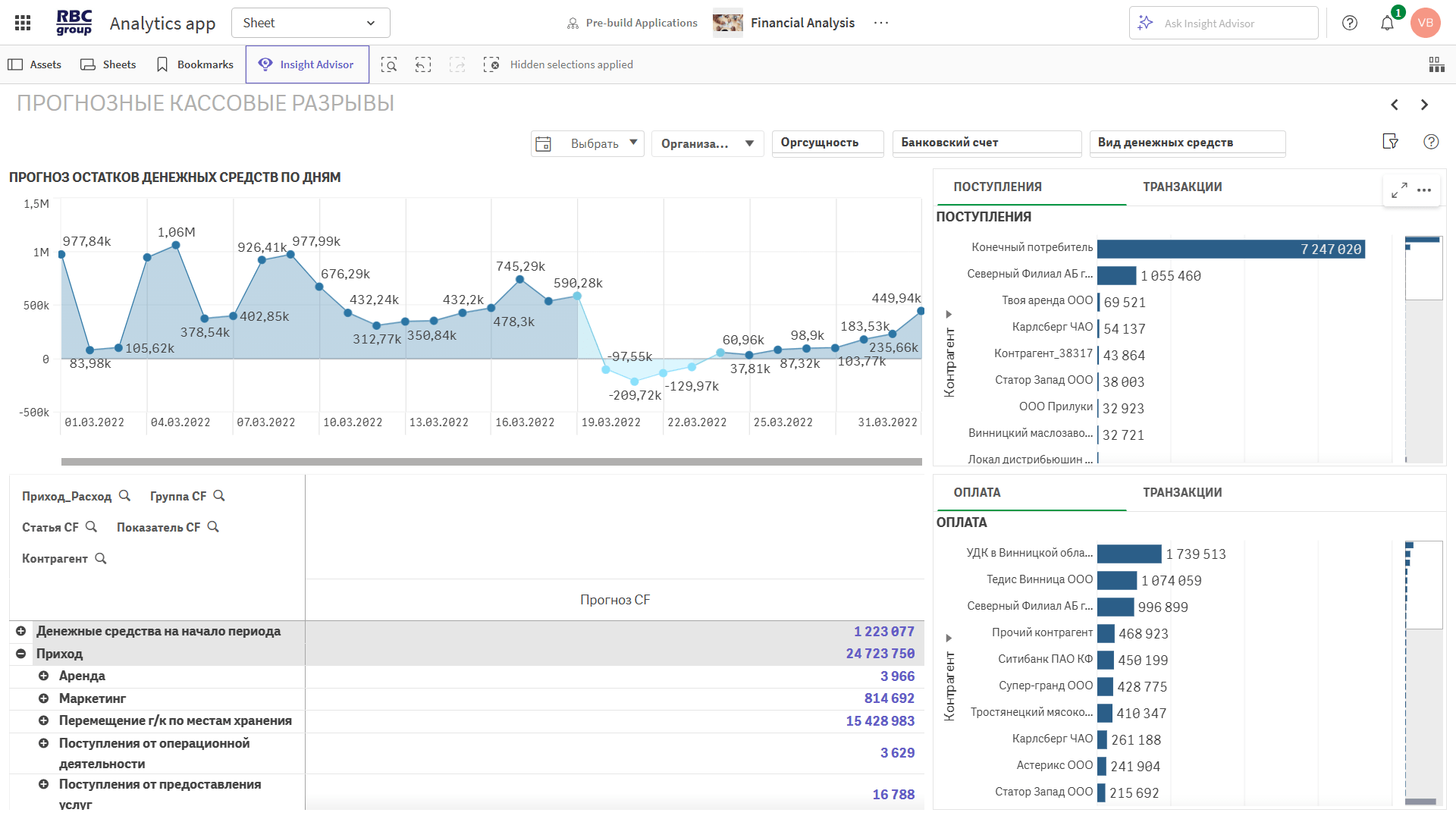
◾ Visualization of cash gaps and deficit coverage
◾ Analysis of excess liquidity by bank and account
In just 30 minutes, you’ll learn how BI helps track cash flows, identify cash discrepancies, forecast balances, and manage excess liquidity.
We’ll demonstrate a ready-to-use analytical solution with minimal implementation requirements.
 Full control over cash flows
The entire cash flow structure—all in one dashboard: operating, investing, and financing activities, broken down to the transaction level.
Identifying and Modeling Cash Flow GapsBI highlights discrepancies by date and region, allowing you to build scenarios and see the consequences before they occur.
Liquidity Optimization and Flexible ForecastingAnalytics helps identify excess inventory, reallocate resources, and test scenarios for sales, loans, and payments.
Full control over cash flowsThe entire cash flow structure—all in one dashboard: operating, investing, and financing activities, broken down to the transaction level.
Identifying and Modeling Cash Flow GapsBI highlights discrepancies by date and region, allowing you to build scenarios and see the consequences before they occur.
Liquidity Optimization and Flexible ForecastingAnalytics helps identify excess inventory, reallocate resources, and test scenarios for sales, loans, and payments.


RBC Group enhances its clients' competitiveness by implementing modern business analytics, data integration and management, artificial intelligence, and advanced analytics systems.




 8
8Qlik Talend Cloud объединяет интеграцию, трансформацию, контроль качества и управление данными в единой платформе. Рассмотрим, как работают CDC, конвейеры данных, Knowledge Marts, RAG и AI-сценарии — и какие задачи они решают на практике.
 13
13Как понять, где бизнесу действительно не хватает персонала, а где — эффективности? Рассмотрим, как аналитика помогает управлять ресурсами, затратами и производительностью.
 27
27Как объединить данные из различных корпоративных систем, поддерживать их актуальность и организованно передавать между источниками и целевыми средами? Рассмотрим основные подходы к интеграции данных, сценарии их использования и принципы построения современной архитектуры данных.
8Qlik Talend Cloud объединяет интеграцию, трансформацию, контроль качества и управление данными в единой платформе. Рассмотрим, как работают CDC, конвейеры данных, Knowledge Marts, RAG и AI-сценарии — и какие задачи они решают на практике.
13Как понять, где бизнесу действительно не хватает персонала, а где — эффективности? Рассмотрим, как аналитика помогает управлять ресурсами, затратами и производительностью.
27Как объединить данные из различных корпоративных систем, поддерживать их актуальность и организованно передавать между источниками и целевыми средами? Рассмотрим основные подходы к интеграции данных, сценарии их использования и принципы построения современной архитектуры данных.
Warning: foreach() argument must be of type array|object, false given in /home/rbcgrp/rbcgrp.com/www/wp-content/themes/theme-sp/template/blog.php on line 374

Cash Flow Analysis
The ability to self-finance current operations is the result of sound planning of the company’s cash inflows and obligations, as well as regular monitoring of these indicators. Cash flow analysis allows you to track trends across three types of activities:
- operational;
- investment;
- financial.
Current-period metrics are compared with targets and the results from the same period in the previous month, quarter, or year. An in-depth analysis helps identify the causes of deviations from targets and take steps to address them. Depending on the objectives of the analysis, reports can be generated for a week, a month, a quarter, a year, or any other custom period.
Cash flow analysis helps prevent situations where a company is forced to raise short-term capital in the form of expensive loans to meet its obligations, or is forced to shut down altogether due to a prolonged period of insolvency. Cash flow analysis goes hand in hand with planning.
How BI Helps Manage Cash Flow More Effectively
Traditionally, the cash flow statement was prepared using manual data processing in Excel. This involved processing information from multiple sources: reviewing cash flow history, analyzing planned and actual operating expenses, evaluating the capital expenditure plan, and analyzing accounts receivable and accounts payable balances. The large volume of work was the main challenge in preparing the report.
Analyzing a company’s cash flows in BI applications eliminates this drawback. Data is automatically loaded into the system, sorted, and transformed into an easy-to-understand format. Business analytics software helps companies automate cash flow analysis and provides the tools needed to consolidate information. The result of using business analytics platforms is simplified cash flow planning and forecasting, which enables more confident and rapid management decision-making.
By using BI as a tool for analyzing an organization’s cash flows, financial managers can identify cash shortages or surpluses well in advance. This enables the organization to respond quickly to growth opportunities or cut costs when necessary. Effective cash flow management will allow a company to weather even the most challenging crises with ease.
What resources are used in business analytics to analyze cash flow?
BI employs a comprehensive approach consisting of direct and indirect methods of cash flow analysis. The first method uses revenue as the basis for analysis. In this method, operating results are grouped by type of activity (operating, investing, and financing). The indirect method of cash flow analysis allows for establishing a relationship between net income and changes in cash balances. This method requires the application of adjustment factors.
Cash Flow Ratios
Comparative LFL analysis of key cash flow ratios. The page listing these key indicators provides a general overview of cash flows from operating, investing, and financing activities.
Overview Cash Flow
Analysis of changes in cash flow indicators by individual line items through comparison with budgeted figures and data from previous periods. This allows for an examination of the magnitude of deviations and the identification of their causes.
Cash Flow Forecast
It allows you to anticipate a cash shortfall in meeting your obligations during the forecast period, taking into account planned receipts and payments. Cash flow analysis enables you to foresee such a situation in advance and negotiate payment deferrals, debt restructuring, or take steps to prepay certain obligations.
Cash position as of
It shows the cash assets held in accounts and on hand as of a specific date. For small businesses, this is a simple task, but for large companies with dozens of accounts, determining the amount of available funds can be a significant challenge.
Transactions Cash Flow
A list of incoming and outgoing payments for the selected period. This allows you to analyze cash flows by examining individual transactions.

